Platform overview

Monitoring Predictive AI on live operations.

Real-time monitoring across every asset and operation, with AI forecasting time to limit and ranking every anomaly by cost.

Book a demo
Monitoring / SAG mill drive
Control systemMotor current drift
HistorianTemperature trend
Maintenance systemFilter service deferred
DocumentsDrive manual
Shift reportsCabinet heat noted
Alarms raisedNoneEvery reading within limits
Live patternSAG mill drive losing cooling margin, full plant stoppage at risk
Early warningTime to actAt the next planned stop

ALive

Every asset and operation, monitored live.

Throughput, energy and equipment condition, read as they change, mine to mill.

  • ProductionEvery circuit against its plan, shift by shift.
  • EquipmentEvery asset placed in its circuit and marked act now, watch, plan or healthy.
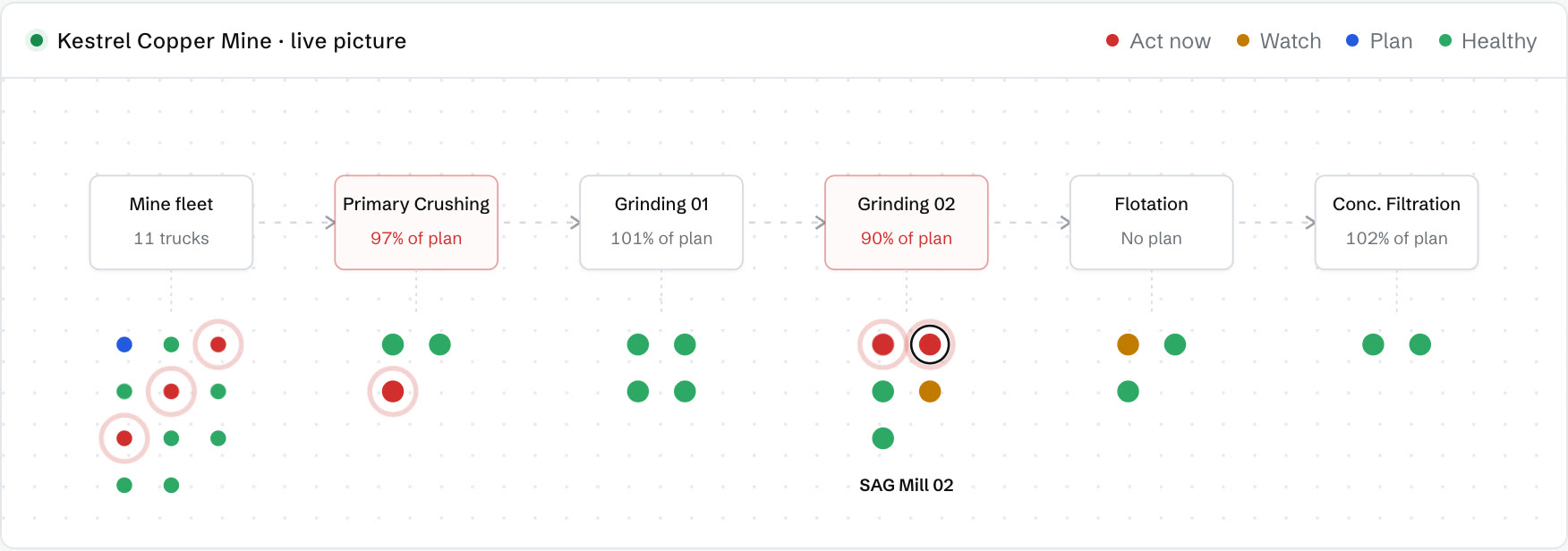
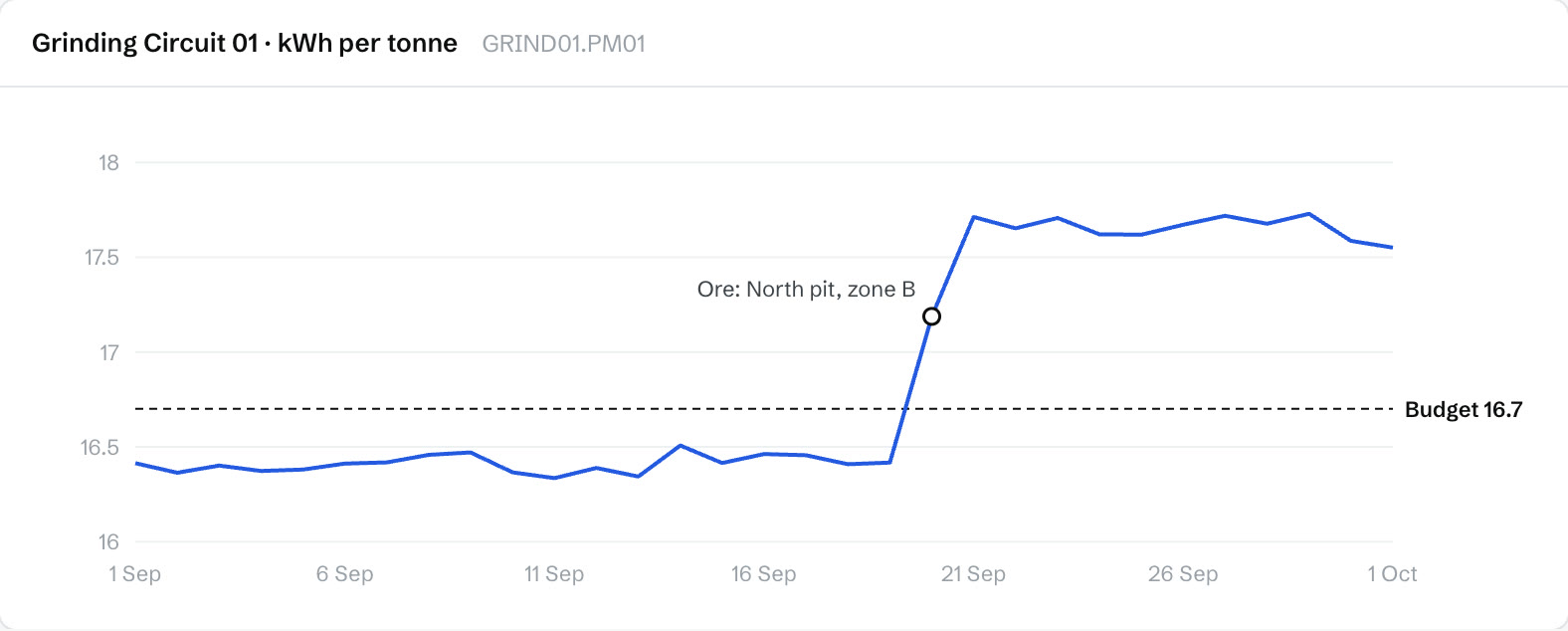
Cerno control view: every circuit from mine fleet to concentrate filtration against plan, with each asset marked by condition Cerno energy chart: grinding circuit energy per tonne rising above budget after an ore change
The site live, and energy per tonne rising after an ore change

BForecast

Forecast time to limit.

Each trend is carried to its limit, so work lands at a planned stop, not a breakdown.

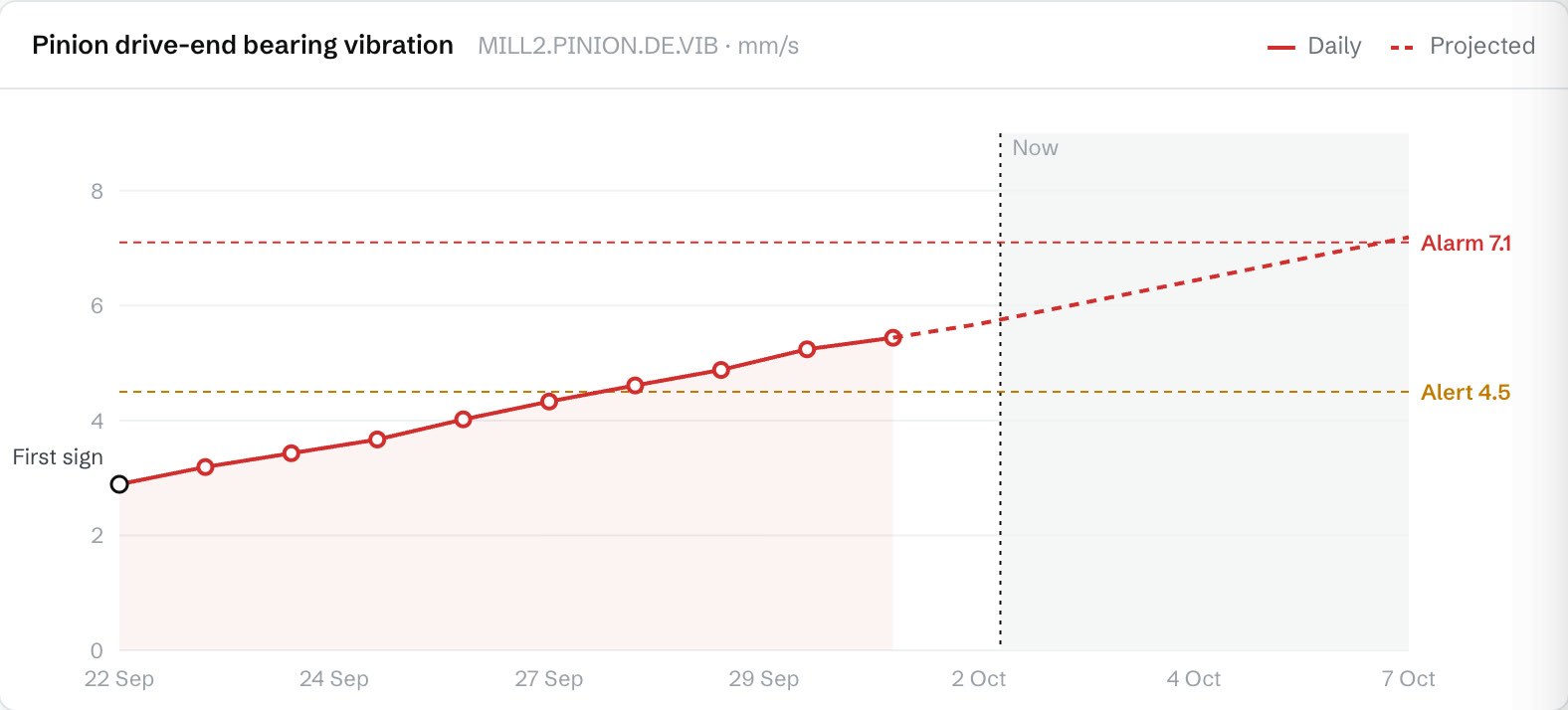
  • Days to limitBearing vibration at 5.44 mm/s, rising 0.29 a day: about 5 days to alarm.
  • Month-end budgetsEnergy and output projected to the end of the month at the current pace.
Cerno case chart: SAG mill pinion bearing vibration recorded and projected to its alarm limit
Recorded, then projected to the alarm limit

CRanked

Anomalies ranked by cost of waiting.

Each anomaly carries the cost of leaving it: lost tonnes at margin plus the repair. The largest exposure comes first.

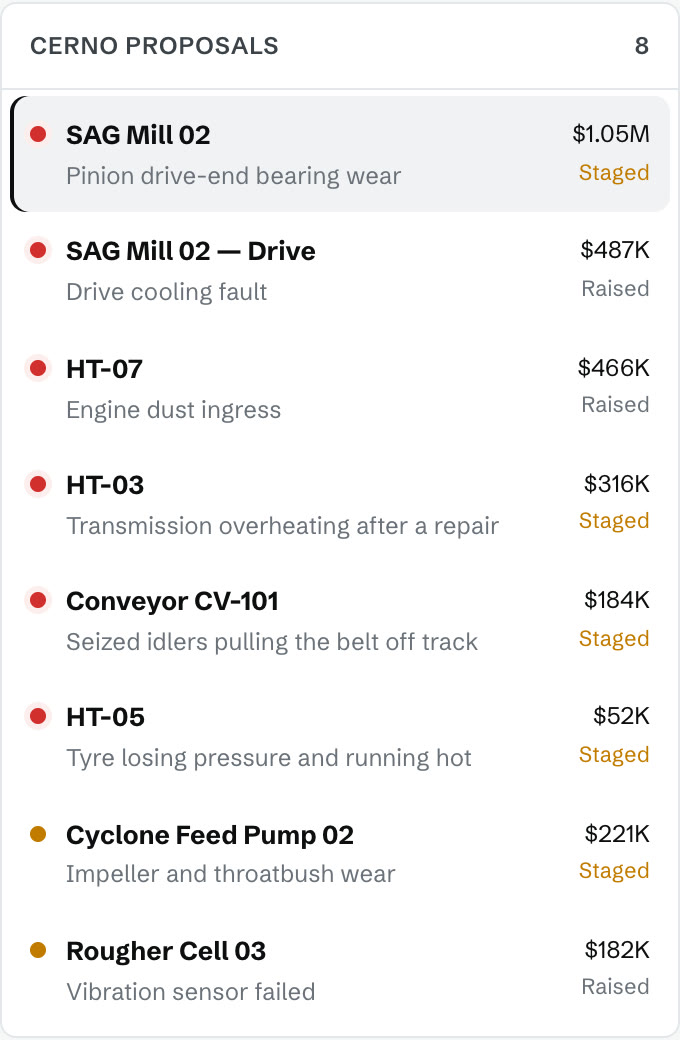
  • Cost of waitingRun to failure against fix now: $1.28M against $230K on SAG Mill 02.
  • Time to actEach item carries the date it must be done by.
Cerno proposals list ordered by cost of waiting, SAG Mill 02 first at $1.05M
Proposals ordered by what waiting would cost

DAcross systems

No single system shows the whole picture.

Each system can look normal while a loss builds between them. AI reads them together as one pattern.

  • Across systemsProcess data, maintenance records, documents and shift reports are read side by side.
  • Within limitsA pattern can be recognised while every reading remains inside its limit.

Existing alarms stay as they are.

  • Alongside alarmsAlarms in existing systems continue unchanged.
  • Read onlyMonitoring reads data and writes nothing to control systems.
  • No automatic actionA warning opens a case. Any action requires a named approver.
AI agents

Common questions

How does this differ from existing alarms?

An alarm responds to one signal crossing one limit. Monitoring assesses signals, maintenance records, documents and shift reports together, and can recognise a pattern while every reading remains within its limit.

Does monitoring act on its own?

No. A warning opens an investigation. Any action requires a named approver.

How are false warnings limited?

Every warning carries its evidence and is tested by an investigation. Verified outcomes return to operational memory and inform what is recognised next.

See Cerno at work on an operation like yours.